How the MRT3 Circle Line Is Impacting Property Values in Klang Valley
The recent approval of the Final Railway Scheme for the Mass Rapid Transit 3 (MRT3) Circle Line in July 2025 marks a pivotal moment for the Malaysian real estate landscape. As the "missing link" in the Klang Valley’s integrated transit network, the MRT3 is not merely a transportation project; it is a catalyst for urban rejuvenation that is expected to reshape property valuations across Greater Kuala Lumpur.
With land acquisition set to commence and construction mobilization targeted for 2027, investors, homeowners, and developers are keenly analyzing the potential MRT3 Circle Line property impact. This article delves into the specific routes, the economic mechanics of transit infrastructure, and localized price trends to determine where the next wave of capital appreciation will likely occur.
Understanding the MRT3 Circle Line: The "Orbital" Game Changer
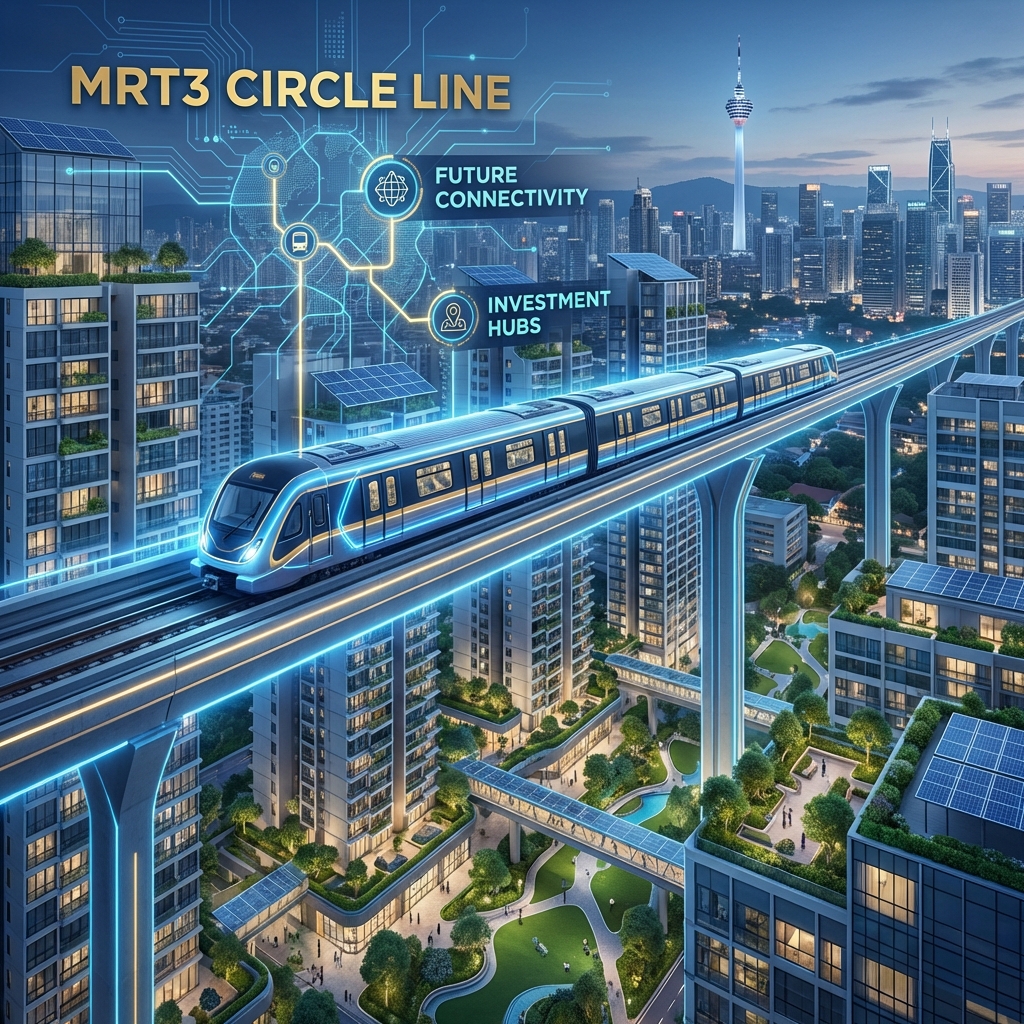
Unlike its predecessors, the MRT1 (Kajang Line) and MRT2 (Putrajaya Line), which radiate outward from the city center, the MRT3 is an orbital line. It encircles the city perimeter, connecting disjointed suburbs and integrating existing radial lines into a cohesive grid.
Route and Key Technical Specifications
The MRT3 spans 51.6 kilometers, comprising 40 kilometers of elevated tracks and 11 kilometers of underground tunnels. The line features 31 active stations (plus three provisional ones) and includes 10 interchange stations that connect to the MRT1, MRT2, LRT, Monorail, and KTM Komuter lines.
The alignment is designed to bypass the congested city center, allowing commuters to travel between suburbs like Cheras and Mont Kiara without entering the central business district.
Key Stations and Interchanges
The strategic placement of stations is crucial for MRT3 stations property value. Key interchanges include:
- Titiwangsa: A major hub integrating five rail lines (MRT3, MRT Putrajaya, LRT Ampang, LRT Sri Petaling, and Monorail).
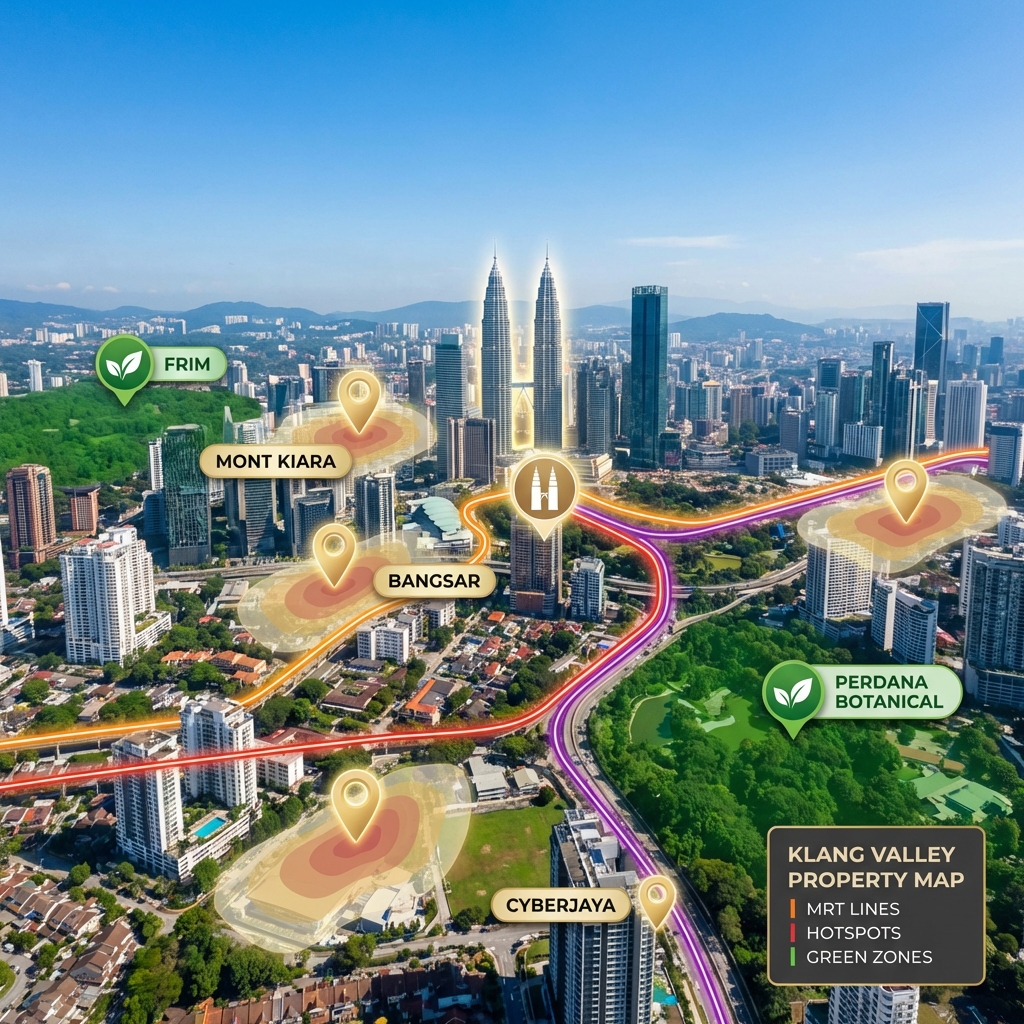
- Bukit Kiara / Sri Hartamas / Mont Kiara: Connecting affluent western suburbs that previously lacked rail access.
- Pantai Dalam: Integration with KTM Komuter, serving the Bangsar South vicinity.
- Taman Midah: Interchange with the MRT Kajang Line.
The Economics of Transit: Accessibility and Property Demand
The relationship between transportation infrastructure and real estate pricing is grounded in the reduction of travel costs—both time and money. According to urban economic theories like Alonso’s Bid-Rent Theory, improved accessibility increases the desirability of land, thereby driving up values.
Accessibility as a Value Driver
In Malaysia, properties within a 500-meter radius of transit stations have been observed to command resale premiums of up to 30%. The MRT3 strengthens this dynamic by introducing "lateral" connectivity. For example, reducing a commute from Ampang to Damansara Heights without needing to drive through downtown traffic creates a "time luxury" that tenants and buyers are willing to pay for.
Rental Market and Yields
The Malaysia real estate market is witnessing a shift where younger professionals prioritize mobility over square footage. The rental market is projected to expand at a 6.32% CAGR through 2031, driven significantly by transit-linked apartments. Properties near MRT stations experience lower vacancy rates and consistent demand from expatriates and students who rely on public transport.
Localized Property Trends: Winners of the Circle Line
The impact of the MRT3 is not uniform; it varies based on existing infrastructure, neighborhood maturity, and the type of development.
1. Titiwangsa: The Super-Interchange
Titiwangsa is poised to become one of the most connected locations in Kuala Lumpur. As a five-line interchange, high-density residential developments here are already commanding premium prices.
- Vue Residences: Situated near the station, asking prices have averaged RM716 psf, with rental rates around RM2.40 psf.
- TR Residence: Asking prices have reached RM820 psf, reflecting the high demand for connectivity.
2. Mont Kiara and Sri Hartamas: Breaking the Connectivity Barrier
Historically, Mont Kiara and Sri Hartamas have been affluent but car-dependent enclaves. The introduction of the MRT3 station at Mont Kiara will likely reduce the "car-dependency discount" that affects older properties. New developments like Arte @ Mont Kiara are positioning themselves to capitalize on direct access to the station via link bridges.
3. Old Klang Road and Kuchai Lama: Urban Rejuvenation
These mature neighborhoods often suffer from traffic congestion. The introduction of the Kuchai and Jalan Klang Lama stations is expected to spark urban renewal.
- Kuchai East: A serviced residence project located between the Kuchai MRT2 station and the upcoming MRT3 interchange, benefiting from dual-line access.
- Bloomsvale: A mixed-use development on Old Klang Road targeting investors looking for lifestyle convenience and connectivity.
4. Setiawangsa and Ampang: The Eastern Corridor
The eastern side of the loop will see enhanced connectivity for high-density residential zones.
- Astrum Ampang: A SoHo development featuring a 150-meter direct link bridge to the Jelatek LRT station, which is one stop away from the Setiawangsa MRT3 interchange.
- The Vesta Residences (SkySierra): Located in Setiawangsa, this project is just a 2-minute walk from the proposed station, targeting family-oriented buyers.
See also: Top 5 Condos to Watch in Setiawangsa and Ampang
Transit Oriented Development (TOD) Malaysia: The New Standard
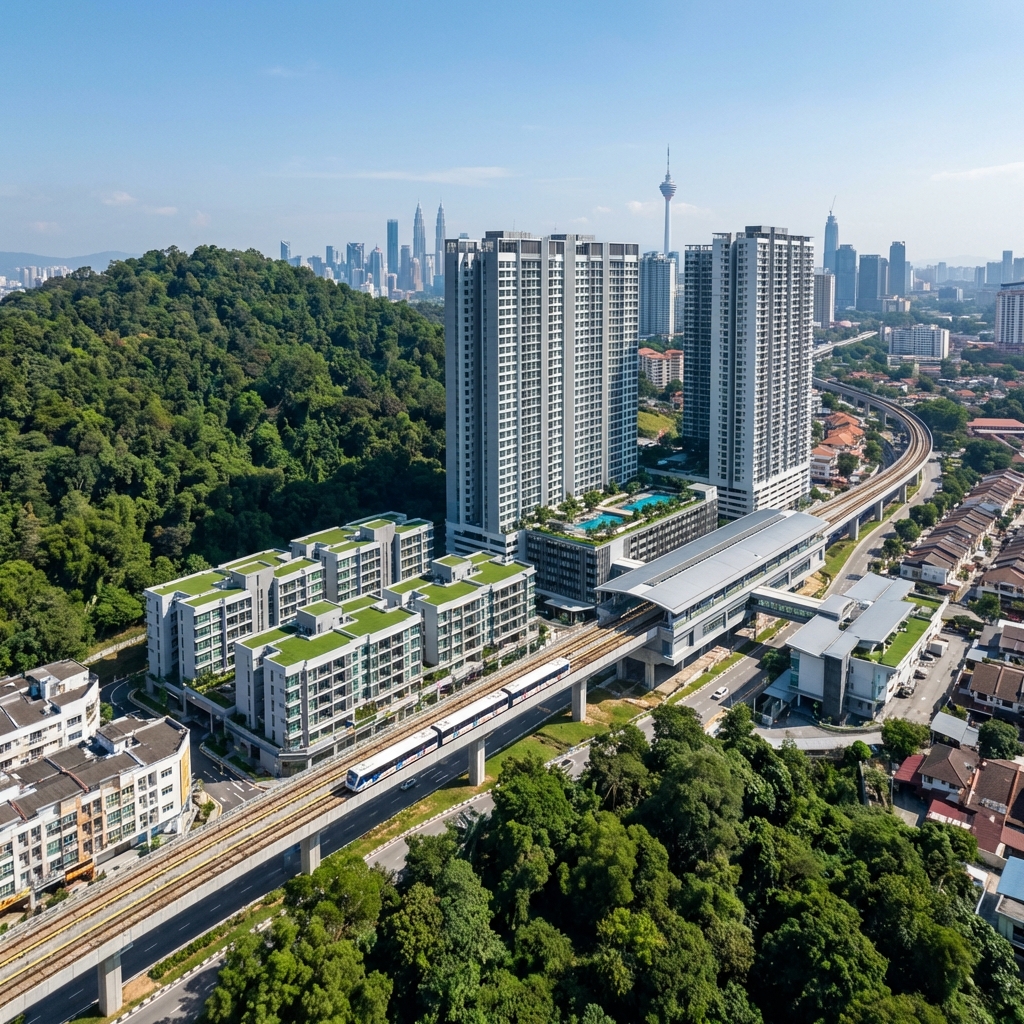
The MRT3 project is closely aligned with the concept of transit oriented development (TOD) Malaysia. TODs are high-density, mixed-use developments located within walking distance (400m–800m) of transit hubs.
Principles of Success
Successful TODs in Malaysia, such as KL Sentral and Bandar Sunway, integrate residential units with offices, retail, and civic facilities to minimize car dependency. The MRT3 is expected to spur similar developments, particularly where land acquisition has been optimized. MRT Corp successfully reduced land acquisition lots from 1,012 to 690 (a 31% reduction) to minimize social displacement while maximizing development potential.
The "Living Near Transit" Premium
Data indicates that projects with direct links to stations perform better during market downturns. For instance, during the rollout of MRT1, neighborhoods like TTDI and Kota Damansara saw price premiums of 10% to 20% relative to non-MRT areas. The MRT3 is expected to replicate this, particularly in areas like Pantai Dalam, where the integration with KTM Komuter creates a "hybrid connectivity" node.
Construction Phase Dynamics and Risks
While the long-term outlook is positive, the immediate future involves a heavy construction phase starting in 2027.
Temporary Disamenities
Research on rail transit impacts notes that properties immediately adjacent to construction sites may experience "disamenity discounts" due to noise, vibration, and dust. In affluent neighborhoods, homes extremely close to the tracks might see a temporary stagnation or slight decline in value during the construction period due to these externalities.
Mitigation and Noise Control
To address this, rigorous noise control standards are being applied. Thresholds for construction noise are set by local authorities; for example, the City of Kuala Lumpur limits construction noise to 5 dBA above ambient levels during certain hours. Developers and MRT Corp are expected to implement noise barriers and vibration dampening technology, particularly for the 40km of elevated tracks.
Market Forecast: What Lies Ahead for 2026–2032?
The Malaysian property market is entering a growth phase. The market size is projected to grow from USD 40.16 billion in 2025 to USD 55.82 billion by 2031, representing a CAGR of 5.64%.
Key Drivers for MRT3 Corridors
- Infrastructure Spending: The government’s commitment to the MRT3 (capped at RM45 billion) ensures sustained infrastructure spending that supports the construction and real estate sectors.
- Policy Support: Initiatives like the doubling of financing guarantees for first-time homebuyers in Budget 2026 will support demand in the residential sector.
- Industrial Spillover: The logistics and industrial sectors are expanding, driven by data center investments in Johor and Selangor. This economic activity fuels demand for residential properties in well-connected transit corridors.
Strategic Outlook
Analysts from RHB Research and MBSB Research remain positive on the construction sector, citing companies like Gamuda, Sunway Construction, and IJM Corp as key beneficiaries of MRT3 contracts. For property investors, the window between the start of land acquisition (late 2025/2026) and the commencement of operations (2032) offers a strategic entry point before the full "maturity premium" of the infrastructure is priced in.
For more insights, read our Investment Strategies for the 2026 Malaysian Property Market.
Conclusion
The MRT3 Circle Line is set to be a transformative force for the Klang Valley property market. By closing the loop on the rail network, it unlocks the potential of underserved neighborhoods and reinforces the value of established hubs like Titiwangsa and Mont Kiara.
While the construction phase between 2027 and 2030 may bring temporary disruptions, the long-term trajectory for MRT3 Circle Line property impact is undeniably positive. Properties within a 10-minute walk of these new stations—particularly those designed as integrated TODs—are expected to outperform the broader market in terms of both capital appreciation and rental yield. For savvy investors and homebuyers, the time to scout these locations is now, before the rails are laid and the prices rise.
Frequently Asked Questions (FAQ)
Does MRT3 increase property values? Yes, historical data from MRT1 and MRT2 indicates that properties within walking distance (typically 500m to 1km) of stations experience price premiums of 10% to 30% compared to those further away. The enhanced connectivity reduces travel time and cost, making these areas more desirable for tenants and buyers.
Which MRT3 station areas are rising fastest? Areas with high interchange connectivity or those receiving rail access for the first time are expected to see the fastest growth. Titiwangsa (5-line interchange) is a primary hotspot. Additionally, Mont Kiara and Sri Hartamas are expected to see significant rental market shifts as they gain their first rail connections. Old Klang Road and Kuchai Lama are also prime for rejuvenation-led growth.
Is it worth buying property near MRT3? Yes, buying near MRT3 stations is considered a sound long-term investment. The "network effect" of the Circle Line enhances the utility of the entire Klang Valley transit system, stabilizing rental demand and supporting capital appreciation. However, investors should be mindful of the construction timeline (completion circa 2032) and ensure the property is not located immediately adjacent to tracks where noise could be an issue.
When will the MRT3 be completed? Land acquisition is targeted for completion by the end of 2026, with construction expected to begin in 2027. The line is projected to be fully operational by 2032.
What is a Transit Oriented Development (TOD)? A TOD is a mixed-use residential and commercial area designed to maximize access to public transport. In Malaysia, these developments typically feature high-density living, pedestrian-friendly walkways, and reduced parking ratios to encourage public transit use. Examples include developments near KL Sentral and the upcoming Astrum Ampang near the Setiawangsa/Jelatek interchange.