Kajang Property Market Outlook 2026: Affordable Growth or Market Saturation?
As the Klang Valley continues to expand outward, the search for value-for-money real estate has pushed homebuyers and investors further into the southern corridors of Selangor. Among these, the Kajang property market 2026 outlook stands at a fascinating crossroads. Once a quiet town known primarily for its satay, Kajang has morphed into a bustling satellite city, driven by massive infrastructure upgrades and a population boom.
However, as we approach 2026, a critical question arises: Is Kajang still the bastion of affordable growth, or is it facing the early signs of market saturation? This article explores the Kajang house price forecast, demand dynamics, and the infrastructure catalysts shaping this pivotal Klang Valley suburb.
At a Glance: Kajang Market Profile 2026
| Metric | Data |
|---|---|
| Avg Price Range | RM500k - RM700k (Landed) |
| Rental Yield | 3.0% - 4.0% |
| Buyer Profile | First-Time Buyers, Young Families |
| Risk Level | Medium-High (High-Rise Overhang) |
| Growth Potential | Moderate (Landed appreciation) |
1. Kajang’s Role as an Affordable Klang Valley Suburb
Kajang’s primary appeal has historically been its affordability relative to Kuala Lumpur and Petaling Jaya. As urban sprawl pushed development boundaries beyond the city center, Hulu Langat district—which houses Kajang—became a primary beneficiary.
The Demographic Shift
The transformation of Kajang is not merely physical but demographic. According to academic research on suburban migration, the surge in real estate prices in the city center has forced middle-income earners to migrate to suburbs like Kajang. This migration is driven by the desire for landed property, which remains out of reach for many in the city center.
Data from the Kajang Municipal Council (MPKj) indicates a robust population trajectory. In 2017, the population was approximately 1.0 million, and it is projected to hit 1.35 million by 2035. This steady influx of residents underpins the fundamental demand for housing, reinforcing Kajang’s status as a key residential hub.
Income and Affordability
While prices have risen, Kajang remains comparatively affordable. However, typical "affordability" metrics are being stretched. With 76% of households earning less than the amount required to comfortably afford homes priced above RM300,000, Kajang affordable property remains the most active segment, with terraced houses being the preferred choice for 41% of Malaysian buyers.
2. Price Movement Trends and 2026 Forecast
As we look toward the Kajang house price forecast for 2026, the data suggests a divergent market where landed homes appreciate while high-rises face headwinds.
Resilient Landed Property Prices
According to the National Property Information Centre (NAPIC) report for the first half of 2025, the residential market in Selangor has shown resilience. Double-storey terraces in Kajang, specifically in areas like Taman Bukit Permai, recorded a capital appreciation of approximately 9.2%. This mirrors trends in other mature Selangor suburbs, indicating that well-located landed units in Kajang are holding their value.
The Forecast for 2026
Moving into 2026, we anticipate moderate capital appreciation for landed properties in Kajang, likely in the range of 3% to 5%, driven by the scarcity of freehold land and the completion of major highways.
However, the overall market volume has seen some softening. In the first half of 2025, residential transaction volumes in Selangor dipped by 7.9% compared to the previous year. This suggests that while prices for desirable units are rising, buyers are becoming more selective.
Verdict: The divergence between property types is expected to widen, with landed homes driving the "growth" narrative and high-rises contributing to "saturation" risks.
3. Demand Drivers: Who is Buying in Kajang?
The appetite for homeownership in Kajang is heavily fueled by first-time buyers and young families. Young families prioritizing immediate city access over land size may eventually graduate to fringe areas like Setiawangsa.
The Shift to "Affordable Luxury"
Developers have recognized that high-end luxury products move slowly in this corridor. Instead, the demand lies in "affordable luxury"—homes priced between RM500,000 and RM700,000 that offer township amenities.
A prime example is the M Legasi township in Semenyih (neighbouring Kajang), which recorded an 80% take-up rate for its double-storey terrace homes starting from RM635,000. This indicates a strong, latent demand for landed starter homes in the southern corridor.
Financial Constraints and Policy Support
Despite demand, financing remains a hurdle. Government initiatives like the RM10 billion housing credit guarantee scheme and Step-Up Financing for youth introduced in Budget 2025 are designed to unlock this segment. These policies will likely sustain the flow of first-time buyers into Kajang throughout 2026.
4. Condo vs. Landed Home Performance
The disparity between condominium and landed home performance is the defining characteristic of the current Kajang market.
The High-Rise Overhang Risk
There is a tangible risk of saturation in the high-rise segment. NAPIC data reveals that the residential overhang (unsold completed units) in Malaysia is heavily concentrated in high-rises. In Selangor specifically, the number of unsold units under construction jumped by 33.3% in 1H 2025.
For investors, purchasing a generic high-rise unit in Kajang carries the risk of stagnant capital appreciation and fierce rental competition.
Landed Scarcity Value
Conversely, landed homes continue to outperform. As noted earlier, terrace houses in established Kajang neighbourhoods saw price increases of over 9%. The "grounded" nature of these assets appeals to the local demographic, particularly families who prioritize space over vertical living.
5. Infrastructure Impact: MRT and Highways
Infrastructure is the backbone of Kajang’s investment appeal. By 2026, the full realization of several major transport projects will significantly alter the connectivity landscape.
The EKVE: A Game Changer for 2026
The East Klang Valley Expressway (EKVE) is a critical piece of infrastructure slated for completion by late 2025 or early 2026. This highway connects Sungai Long (South Kajang) directly to Ukay Perdana (Ampang), bypassing the congested MRR2. For Kajang residents, this provides a "traffic dispersal scheme" that allows direct access to the city center, spurring value appreciation for properties near the Sungai Long interchanges.
MRT Line 1 and MRT3 Spillover
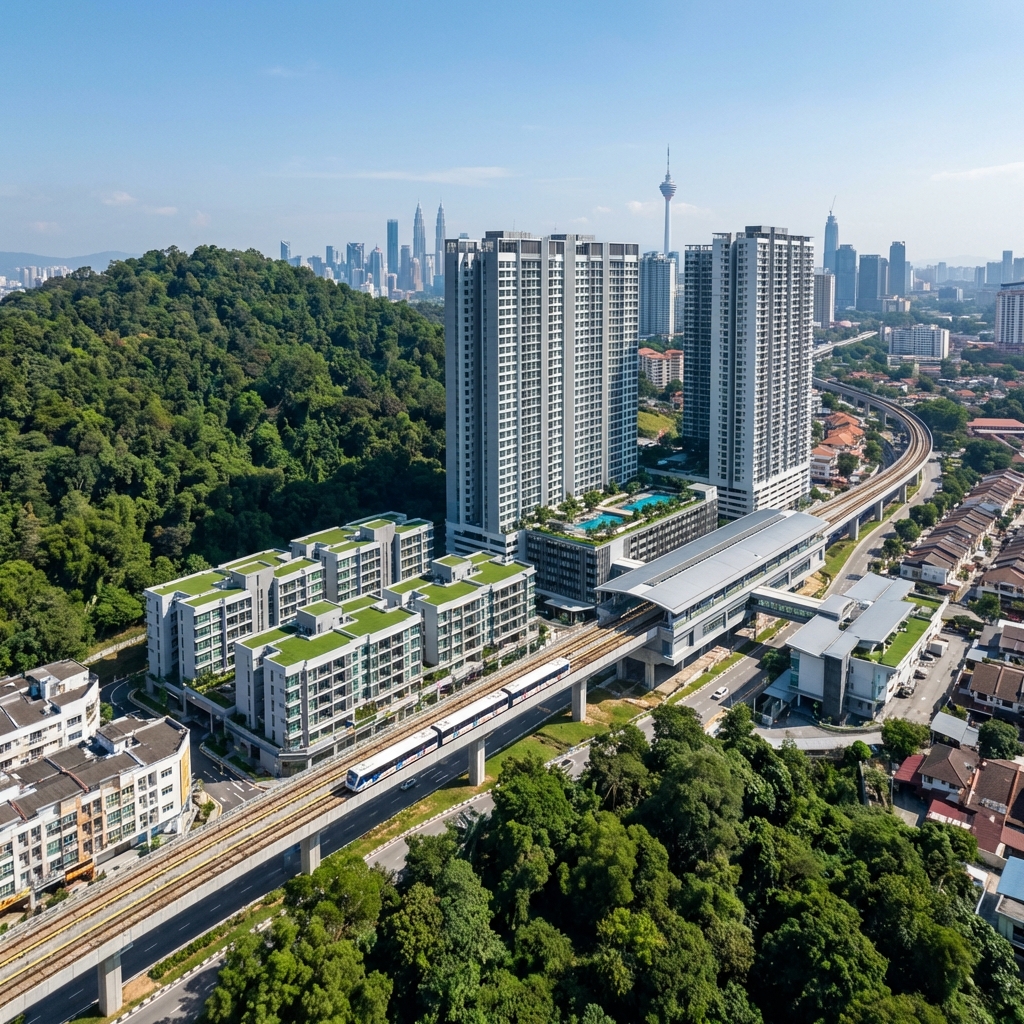
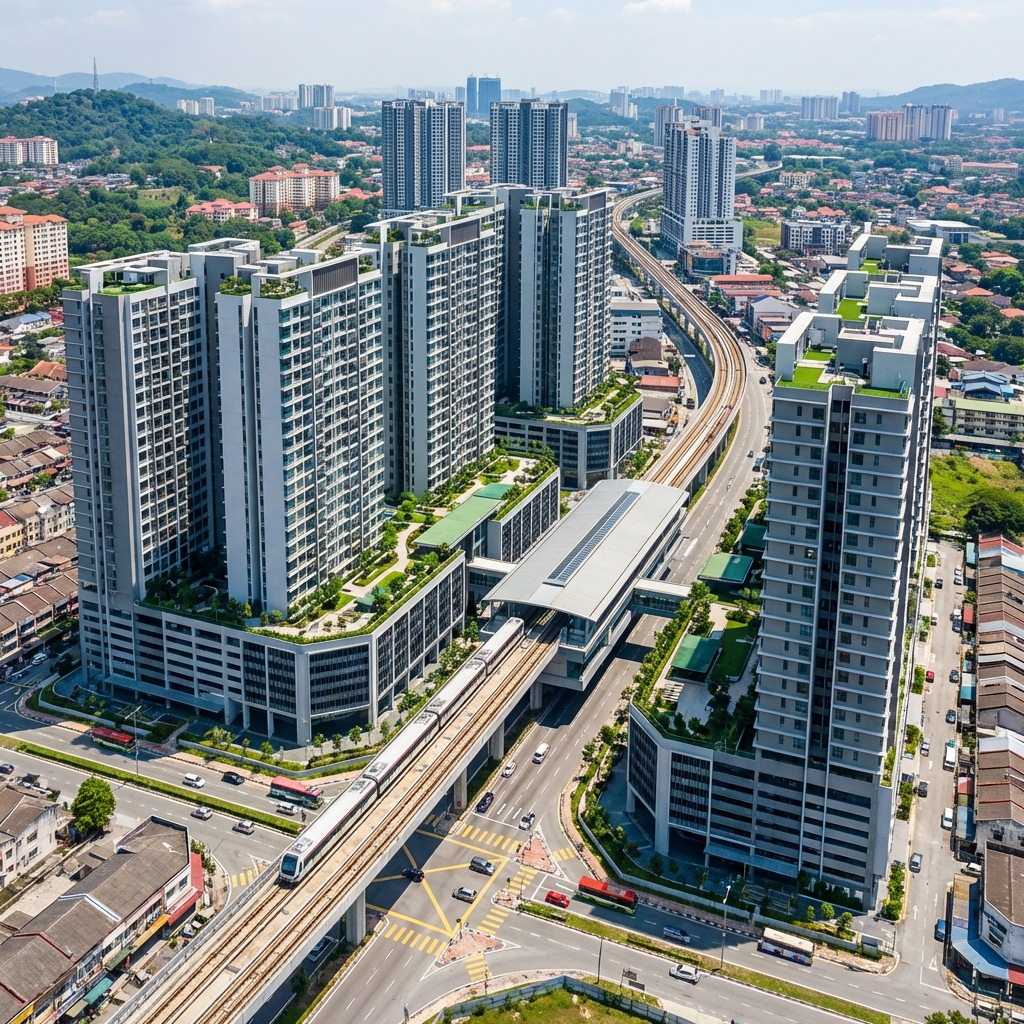
The MRT Kajang Line (MRT1) has already established a "transit premium" for properties within 1km of stations like Stadium Kajang and Sungai Jernih. Looking ahead, the development of the MRT3 Circle Line (slated for future completion) will further enhance the network effect, making commuting to affluent job centers like Mont Kiara more viable.
Flood Mitigation
The Sungai Langat Flood Mitigation Plan (Phase 1) is currently underway. Addressing flood risks is crucial for maintaining property values in low-lying areas, and progress by 2026 will be a key confidence booster for buyers.
6. Rental Yield Potential and Risks
For investors, rental yield potential in Kajang is driven by three main groups: students, the working class, and young professionals.
Yield Benchmarks
According to NAPIC’s 1H 2025 report, the average rental yield for double-storey terrace houses in the Central Region ranges between 1.5% and 7.7%. In Kajang, yields are generally stable, supported by educational institutions like the University of Nottingham Malaysia and various colleges.
Risk: Market Saturation in High-Rises
The "overhang" statistics are the most significant risk factor. With unsold completed units rising, developers may resort to aggressive rebates to clear stock, which can depress secondary market prices. Investors should be wary of buying into high-density developments with thousands of units entering the market simultaneously.
Risk: Rising Cost of Living
Economic pressure on the B40 and M40 groups cannot be ignored. Rising property prices have forced suburban residents to cut back on other expenditures. If inflation outpaces income growth, the pool of eligible buyers for sub-sale properties may shrink.
Conclusion
The Kajang property market outlook for 2026 is one of affordable growth, provided one looks at the right segment. The market is not uniform; there is a clear bifurcation where landed properties in master-planned townships are experiencing healthy appreciation, while the high-rise segment battles saturation issues.
Key Takeaways for 2026:
- Best Bet: Landed terrace houses in gated and guarded townships.
- Watch Out: High-density serviced apartments with high unsold stock.
- Key Catalyst: Completion and full operation of the EKVE highway.
- Price Forecast: Moderate growth (3-5%) for landed; flat for high-rise.
For first-time buyers and investors, Kajang remains a compelling Klang Valley suburb due to its connectivity and relative affordability. However, the "golden era" of easy double-digit returns is over. Success in 2026 depends on selecting properties with scarcity value and lifestyle amenities.
Frequently Asked Questions (FAQ)
1. Is property in Kajang worth buying in 2026? Kajang is ideal for affordability. With median prices lower than KL, it attracts first-time buyers and families. The completion of EKVE and established MRT connectivity makes it a viable option for those working in the city but seeking landed homes.
2. Will the EKVE highway impact Kajang property prices? Yes, the EKVE is a major catalyst, reducing travel time to Ampang and KL. Properties near the Sungai Long interchange are expected to see capital appreciation as accessibility improves, making the area more attractive to commuters.
3. What is the average price of a house in Kajang? Double-storey terrace houses in established areas can range from RM500,000 to RM700,000. The "affordable luxury" segment (RM500k-RM700k) sees the highest demand. High-rise units are cheaper but face oversupply risks.
4. Is Kajang good for rental investment? Demand comes from students (UKM, Nottingham University) and families. Yields are stable around 3-4%. However, the high supply of new serviced apartments limits rental growth for non-landed units. Investing in landed homes offers better long-term security.
5. Does the MRT reach Kajang? Yes, the MRT Kajang Line (MRT1) terminates here, with stations at Stadium Kajang and Sungai Jernih. This provides direct access to Bukit Bintang and Damansara, significantly boosting the appeal of transit-oriented developments in the district.
6. Landed vs High-rise in Kajang: Which is better? Landed property is the clear winner for appreciation and demand in Kajang. The area has a high overhang of unsold high-rise units. Buyers prefer Kajang specifically for the opportunity to own land at an affordable price point.
Related Resources
- First-Time Buyers: Check your eligibility for the Housing Credit Guarantee Scheme (SJKP).
- Compare Suburbs: See how Cheras compares for investment potential.
- Find Listings: Browse curated Kajang Listings here.